
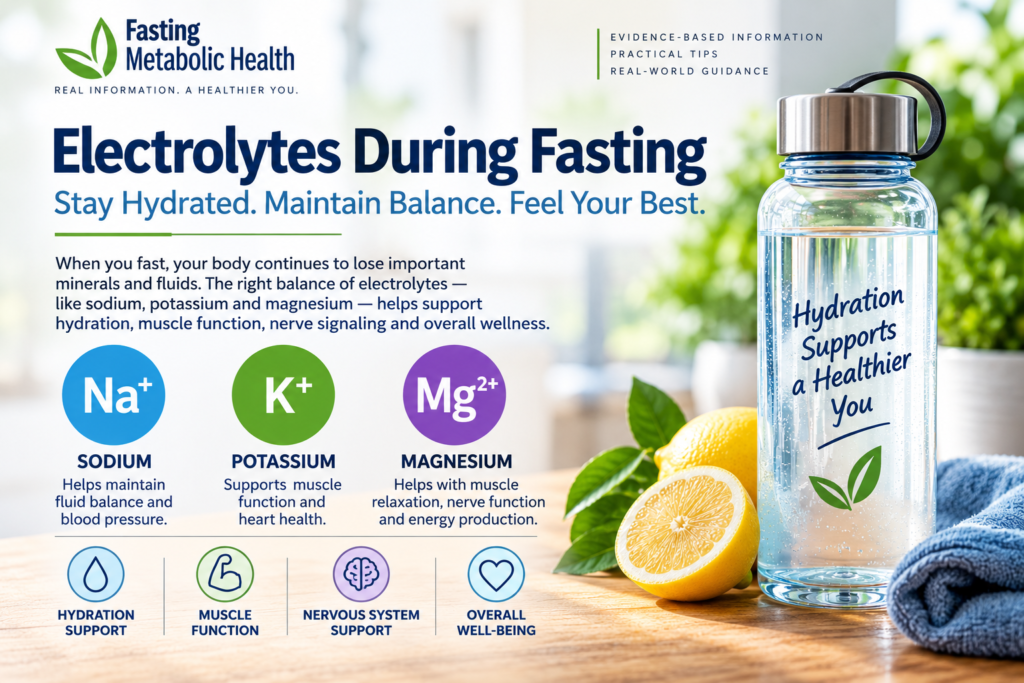
Electrolytes such as sodium, potassium and magnesium are essential for nerve, muscle and fluid balance. Whether you need supplemental electrolytes during fasting depends heavily on the length of the fast, climate, activity, diet, medications and medical conditions.
Short daily fasts are different from prolonged fasting
Most healthy adults doing an overnight or typical time-restricted eating fast can meet electrolyte needs through a balanced diet and normal hydration. Longer fasts create a different situation and should not be treated as simply “more 16:8.” The longer and more restrictive the fast, the more important individualized medical guidance becomes.
Why symptoms can occur
Headache, fatigue, dizziness and muscle cramps can have many causes, including dehydration, caffeine withdrawal, inadequate energy intake, low blood pressure or medication effects. It is risky to assume every symptom is an electrolyte deficiency and start taking large doses of minerals.
Be careful with potassium
Potassium supplements can be dangerous for people with kidney disease and for those taking certain blood-pressure or heart medications. More is not better. Sodium needs also vary considerably, especially in people with hypertension, heart failure or kidney disease.
Hydration matters
Ordinary intermittent fasting generally does not require fluid restriction. Drink according to thirst and circumstances. Excessive water intake can also be harmful because it can dilute blood sodium. Extreme “water challenges” are unnecessary.
Optional hydration tool: An insulated water bottle can make ordinary water easier to keep available during work, travel or exercise. The bottle does not determine how much you should drink; follow thirst, conditions and individualized medical guidance.
View the Frost Buddy Insulated Water Bottle on Amazon
Affiliate disclosure: As an Amazon Associate I earn from qualifying purchases. Price and availability can change.
Choosing an electrolyte product
For people who have a legitimate need for an electrolyte product, compare the actual sodium, potassium and magnesium amounts rather than relying on “fasting” branding. Check for added sugar if maintaining a calorie-free fast matters to you. If you take prescription medicines or have kidney, heart or endocrine disease, ask a clinician before routinely supplementing electrolytes.
Related reading
See fasting safety and exercise while fasting.
Sources & further reading
- NIDDK: Fasting safely with diabetes
- NIDDK: Low blood glucose (hypoglycemia)
- Mayo Clinic: Intermittent fasting benefits and risks (2025)
Editorial standard: We distinguish established findings from promising but uncertain research and update this guide as higher-quality evidence becomes available.
Why sodium gets most of the attention
Sodium is the major electrolyte in extracellular fluid and plays a central role in fluid balance, nerve signaling and muscle function. When insulin levels fall, kidney handling of sodium can change, and some people also reduce sodium intake simply because they are eating fewer meals. Even so, electrolytes during fasting should not be treated as a reason for everyone to consume large amounts of salt.
People with hypertension, kidney disease, heart failure or medicines that affect blood pressure or fluid balance may need specific sodium guidance. More is not automatically better.
Potassium deserves more caution
Potassium is essential for normal nerve, muscle and cardiac function, but excessive supplemental potassium can be dangerous. Kidney function and several common medications strongly influence potassium balance. ACE inhibitors, ARBs, potassium-sparing diuretics and some other medicines can increase the risk of high potassium.
For that reason, concentrated potassium supplements are not a casual fasting accessory. Food remains the usual source of potassium for most healthy people, and anyone with kidney or medication concerns should obtain individualized advice before supplementing electrolytes during fasting.
Magnesium and calcium
Magnesium participates in hundreds of enzymatic reactions and supports normal nerve and muscle function. Calcium is also critical for muscle contraction, nerve signaling and bone health. A short fasting window does not suddenly deplete body stores of either mineral. The larger nutritional question is whether the overall diet consistently provides enough of them.
Supplements can cause side effects and can interact with medicines. Magnesium products, for example, may cause diarrhea, which can worsen fluid loss rather than improve hydration. For label, timing and medication considerations, read our guide to taking magnesium while fasting.
Symptoms are not specific enough to diagnose an electrolyte problem
Headache, fatigue, muscle cramps, weakness and lightheadedness are often blamed on “low electrolytes,” but these symptoms have many possible causes. Dehydration, low blood pressure, inadequate sleep, caffeine withdrawal, medication effects and low blood glucose can produce similar complaints.
Severe weakness, confusion, fainting, persistent vomiting, an abnormal heartbeat or inability to maintain hydration deserves medical attention rather than repeated self-treatment with electrolyte powders.
Exercise, heat and sweating change the equation
A person doing desk work in a cool environment has very different fluid losses from someone running outdoors in summer. Sweat contains water and electrolytes, particularly sodium. Long workouts, heavy sweating and hot conditions can therefore increase replacement needs whether a person is fasting or not.
If you plan to combine training with fasting, see our guide to exercise while fasting. Hydration strategy should reflect the workout and environment, not merely the fact that a fasting clock is running.
How to evaluate an electrolyte product later
Affiliate links: we may earn a commission at no additional cost to you. As an Amazon Associate I earn from qualifying purchases. Prices and availability can change.
When comparing electrolyte products, look beyond marketing terms. Check the amount of sodium, potassium and magnesium per serving, the serving size, added sugars or calories, sweeteners, and whether the doses make sense for your actual needs. A product can be useful without being necessary for every fast.
If maintaining a strict calorie-free fast matters to you, flavored products may also contain calories or other ingredients relevant to that goal. Our guide to what breaks a fast explains how the answer depends on the purpose of the fast.
Practical hydration during routine intermittent fasting
For many healthy adults doing a routine overnight or time-restricted fast, ordinary water and a nutritionally adequate diet during the eating window may be sufficient. Longer fasting, strenuous exercise, high heat, illness and certain medications create different circumstances.
The safest approach to electrolytes during fasting is therefore individualized rather than formulaic: replace what circumstances reasonably require, avoid megadoses, and do not use supplements to mask significant symptoms.
Do not confuse thirst with a requirement for supplements
Thirst is a useful physiologic signal, although it can be less reliable in some older adults and in certain medical situations. Drinking water according to ordinary needs is different from automatically adding an electrolyte mixture every time you feel thirsty. Likewise, clear urine all day is not necessarily a goal; excessive water intake can itself disturb sodium balance.
A practical approach to electrolytes during fasting is to consider fluid losses, fasting duration, exercise, climate and the mineral content of the overall diet rather than following a fixed number of packets or scoops.
Food during the eating window still matters most
Electrolyte supplements cannot make an otherwise nutritionally poor eating pattern complete. Foods eaten during the eating window provide minerals along with protein, fiber, vitamins and energy. Vegetables, fruit, legumes, dairy foods or appropriate alternatives, nuts, seeds and other minimally processed foods can contribute to overall mineral intake depending on the person’s dietary pattern.
If a restrictive fasting schedule makes it difficult to meet nutritional needs, shortening the fasting window may be more sensible than adding a growing collection of supplements.
When professional guidance is especially important
Our fasting safety guide covers medical conditions, medications and warning signs that matter beyond electrolyte choices.
Individual advice is particularly important for people with kidney disease, heart failure, difficult-to-control blood pressure, recurrent fainting, significant gastrointestinal fluid losses or medicines that affect sodium, potassium, blood pressure or kidney function. These conditions can change both the need for replacement and the danger of excessive supplementation.
The goal is not to make fasting harder or more complicated. It is to recognize that electrolytes during fasting are part of ordinary fluid and mineral physiology, and that the safest strategy depends on the person rather than on a universal fasting recipe.