
Metabolic health describes how effectively the body regulates and uses energy while maintaining healthy levels of factors such as blood glucose, blood pressure and blood lipids. It is not a single laboratory value, and it cannot be reduced to body weight alone.
The short answer
Good metabolic health generally means that the systems involved in glucose control, blood pressure, cholesterol and triglycerides, body composition and energy regulation are functioning without major metabolic disease. Clinicians assess these areas with measurements such as blood pressure, fasting glucose or A1c, lipid testing, weight or waist measures, medical history and other individualized tests.
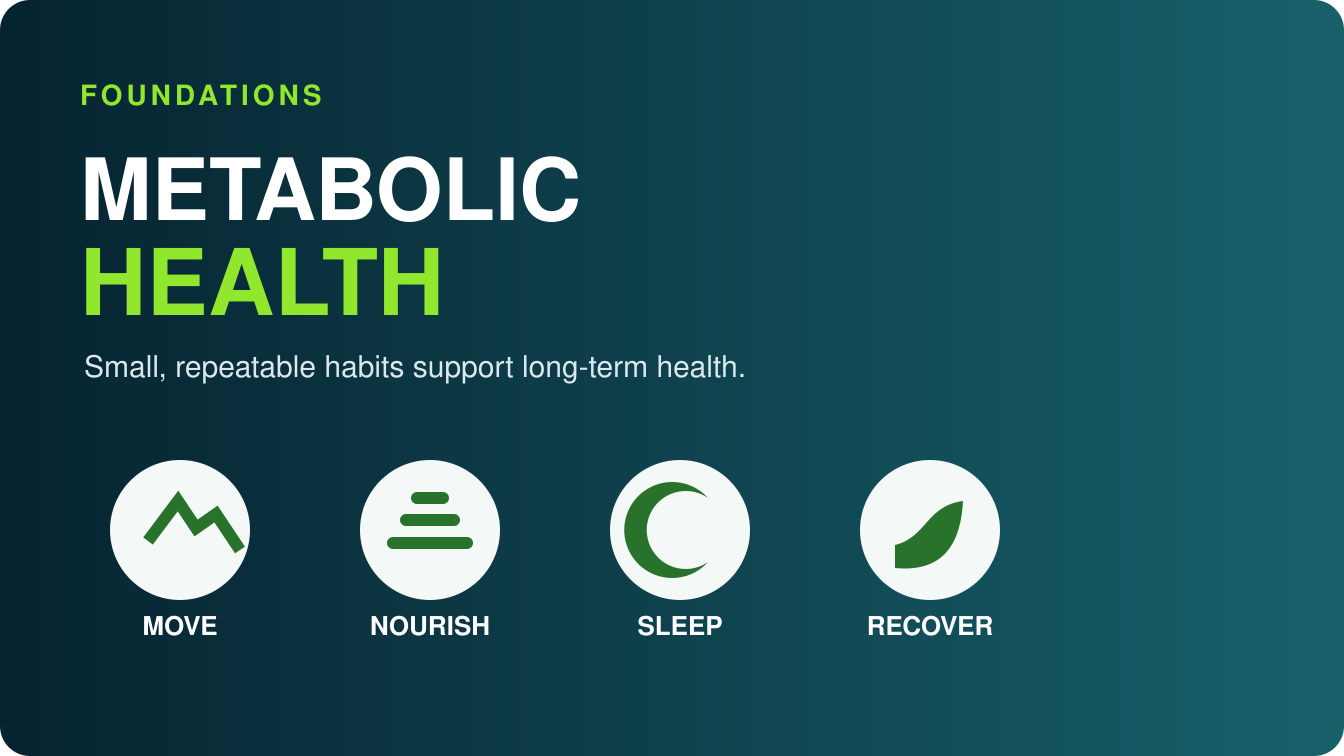
Improvement usually comes from fundamentals rather than a single “metabolism hack”: regular physical activity, resistance training, a nutrient-dense dietary pattern, adequate sleep, avoiding tobacco or nicotine exposure, appropriate weight management when needed, and treatment of conditions such as hypertension, high cholesterol or diabetes.
Key takeaways
- Metabolic health is broader than weight and broader than blood sugar.
- Blood pressure, glucose regulation, blood lipids and body composition provide useful clues.
- Regular movement, strength training, diet quality and sleep are major modifiable factors.
- Intermittent fasting can be one eating-pattern option, but it is not required for metabolic improvement.
- Abnormal laboratory values or blood pressure deserve medical evaluation rather than self-diagnosis.

What does metabolic health mean?
The word “metabolism” refers to the chemical processes that allow the body to obtain, store and use energy. Metabolic health is a broader clinical idea: it reflects how well those processes are working in the context of cardiovascular risk, glucose regulation and overall health.
There is no single universally accepted clinical test labeled “metabolic health.” Research definitions vary. That is why it is more useful to look at several related measurements and behaviors together than to declare someone metabolically healthy or unhealthy from one number.
Blood glucose and insulin regulation
Glucose is an essential fuel, and insulin helps regulate how glucose is used and stored. Persistently elevated blood glucose can indicate prediabetes or diabetes and is associated with long-term damage to blood vessels and organs. Hemoglobin A1c provides information about average glucose exposure over a longer period than a single fasting measurement.
Insulin resistance is also an important concept, but consumer tests and symptoms cannot reliably diagnose it on their own. A clinician can interpret glucose, A1c and other findings in the context of medications, illness and individual risk.
Blood pressure matters
High blood pressure often causes no obvious symptoms, yet it increases cardiovascular and kidney risk. Improving metabolic health therefore includes knowing your blood pressure and treating hypertension when it is present. Diet, activity, sleep, weight management and prescribed medication can all play roles depending on the individual.
Cholesterol, triglycerides and cardiovascular risk
Blood lipids include cholesterol carried in different lipoproteins as well as triglycerides. These values help clinicians estimate cardiovascular risk. A single “good” HDL number does not cancel out other risk factors, and the goal is not to manipulate one marker in isolation.
Dietary pattern, genetics, body composition, physical activity, diabetes and medications can all affect lipid levels. Some people need medication even when their lifestyle is strong because cardiovascular risk is determined by more than behavior.
Body weight is useful information—but not the whole story
Excess body fat, particularly visceral fat around abdominal organs, is associated with insulin resistance and cardiometabolic risk. At the same time, body mass index does not directly measure body composition or tell the whole story about an individual’s health.
A person can have a body weight in a conventional reference range and still have hypertension, abnormal glucose or unfavorable lipids. Conversely, weight alone should not be used to make assumptions about someone’s laboratory values, fitness or medical status.
Build physical activity into the week
If you are considering equipment to make indoor walking more convenient, compare incline, foldable and compact walking pads by usable belt size, storage, stated capacity and return terms. Outdoor walks and other no-equipment activity remain options.
Regular activity improves cardiovascular fitness, glucose handling and many other aspects of health. Current U.S. guidance for adults calls for at least 150 minutes of moderate-intensity aerobic activity per week, or an equivalent amount of vigorous activity, plus muscle-strengthening activity on at least two days.
You do not have to achieve the full target immediately. Walking, cycling, swimming, recreational activity and structured exercise can all contribute. Consistency matters more than finding a supposedly perfect “metabolic” workout.
Do not overlook resistance training
Affiliate links: we may earn a commission at no additional cost to you. As an Amazon Associate I earn from qualifying purchases. Prices and availability can change.
Muscle is metabolically active tissue and an important site for glucose disposal. Resistance training also supports strength, function and preservation of lean mass. For many adults, combining aerobic movement with progressive strength training is more useful than relying on either one alone.
Our guide to exercise while fasting discusses how meal timing can interact with training, performance and recovery.
Choose a sustainable dietary pattern
There is no single diet required for metabolic health. Evidence-based patterns commonly emphasize vegetables and fruits, legumes, whole grains, nuts and seeds, appropriate protein sources and unsaturated fats while limiting highly processed foods, excessive added sugars and other foods that displace nutrient-dense choices.
The best pattern also has to be sustainable. A diet that looks optimal on paper but repeatedly produces extreme restriction and rebound eating is unlikely to be useful long term.
Where intermittent fasting fits
Intermittent fasting can help some people organize eating and may improve certain weight and metabolic outcomes, particularly when it helps create a sustainable reduction in energy intake. But fasting is not a prerequisite for improving metabolic health, and it should not be presented as a cure for insulin resistance, diabetes or cardiovascular disease.
If you are considering fasting, start with our intermittent fasting beginner’s guide and fasting schedules comparison. People using glucose-lowering medicines should obtain individualized medical guidance.
Sleep belongs in the metabolic-health conversation
Sleep is not merely downtime. The American Heart Association includes sleep among its core cardiovascular-health measures, and most adults are advised to aim for roughly seven to nine hours per night. Sleep quality, regularity and sleep disorders can also matter.
If persistent snoring, witnessed breathing pauses, severe daytime sleepiness or other symptoms suggest a sleep disorder, lifestyle advice is not a substitute for appropriate evaluation.
Avoid tobacco and nicotine exposure
Smoking is a major preventable cardiovascular risk. Nicotine products also affect cardiovascular physiology. Improving health is not simply about adding fasting, supplements or exercise while leaving a major risk factor unaddressed.
Track trends, not isolated numbers
Check Price at RENPHO Check Price at Amazon
Affiliate links. As an Amazon Associate I earn from qualifying purchases. We may earn a commission at no additional cost to you. A consumer smart scale is a tracking tool, not a diagnostic device.
Affiliate links: we may earn a commission at no additional cost to you. As an Amazon Associate I earn from qualifying purchases. Prices and availability can change.
Useful measurements can include blood pressure, weight or waist trends when appropriate, glucose or A1c, and a lipid panel. The appropriate frequency depends on age, medical history, medications and previous results. Home devices can provide useful data, but abnormal readings need proper interpretation.
For metabolic health, direction over time is often more informative than obsessing over daily fluctuations. A single unusual glucose value after illness or a single high blood-pressure reading does not establish a diagnosis, but repeated abnormalities deserve attention.
What about supplements and “metabolism boosters”?
No supplement can replace treatment for diabetes, hypertension or high cardiovascular risk. Products marketed as metabolism boosters often rely on stimulant effects, small short-term changes or claims that are much stronger than the clinical evidence.
Before using supplements, consider whether they interact with medications and whether an actual deficiency or clinical need has been identified. The fundamentals—activity, diet quality, sleep, tobacco avoidance and appropriate medical care—have a much stronger role.
How to improve metabolic health without doing everything at once
Choose one or two measurable behaviors that can be sustained. Examples include walking after dinner most days, adding two weekly strength sessions, replacing a routinely sugary drink with a lower-sugar option, improving bedtime consistency, or preparing more meals around minimally processed foods.
Then reassess. Better metabolic health is usually the result of repeated behaviors and appropriate treatment over months and years, not a dramatic seven-day reset.
When to involve a healthcare professional
Seek medical guidance when blood pressure is repeatedly elevated, glucose or A1c is abnormal, cholesterol or triglycerides are concerning, unexplained weight changes occur, or symptoms suggest a medical problem. People already taking medication should not discontinue it because lifestyle markers improve without discussing the change with the prescribing clinician.
Practical bottom line
Metabolic health is best viewed as a collection of interconnected health factors rather than a buzzword. Improving it means working on the factors you can influence while measuring and treating the factors that require medical care. Fasting may be useful for some people, but the foundation remains sustainable nutrition, physical activity, strength, sleep, avoidance of tobacco and evidence-based treatment when needed.