
Program update: Zero’s affiliate offer is unavailable. This guide does not provide an active Zero affiliate purchase link. Evaluate current app features, price and renewal terms before subscribing; a phone timer or paper tracker may be sufficient.
A useful fasting app should reduce mental bookkeeping. If you are learning how to choose a fasting app, start with a simple question: does it make a safe, realistic fasting schedule easier to follow? It should help you record when a fast starts and ends, review patterns, and decide whether a schedule fits real life. If you are new to meal timing, begin with our 7-day beginner guide to intermittent fasting before choosing a more demanding schedule. A fasting app should not pressure you toward longer fasts, diagnose a health condition, or turn an estimated metabolic timeline into a promise about what your body is doing.
The right choice therefore depends less on the number of features and more on whether the app supports a conservative plan you can follow without distracting you from nutrition, sleep, medications, exercise, and professional medical advice.
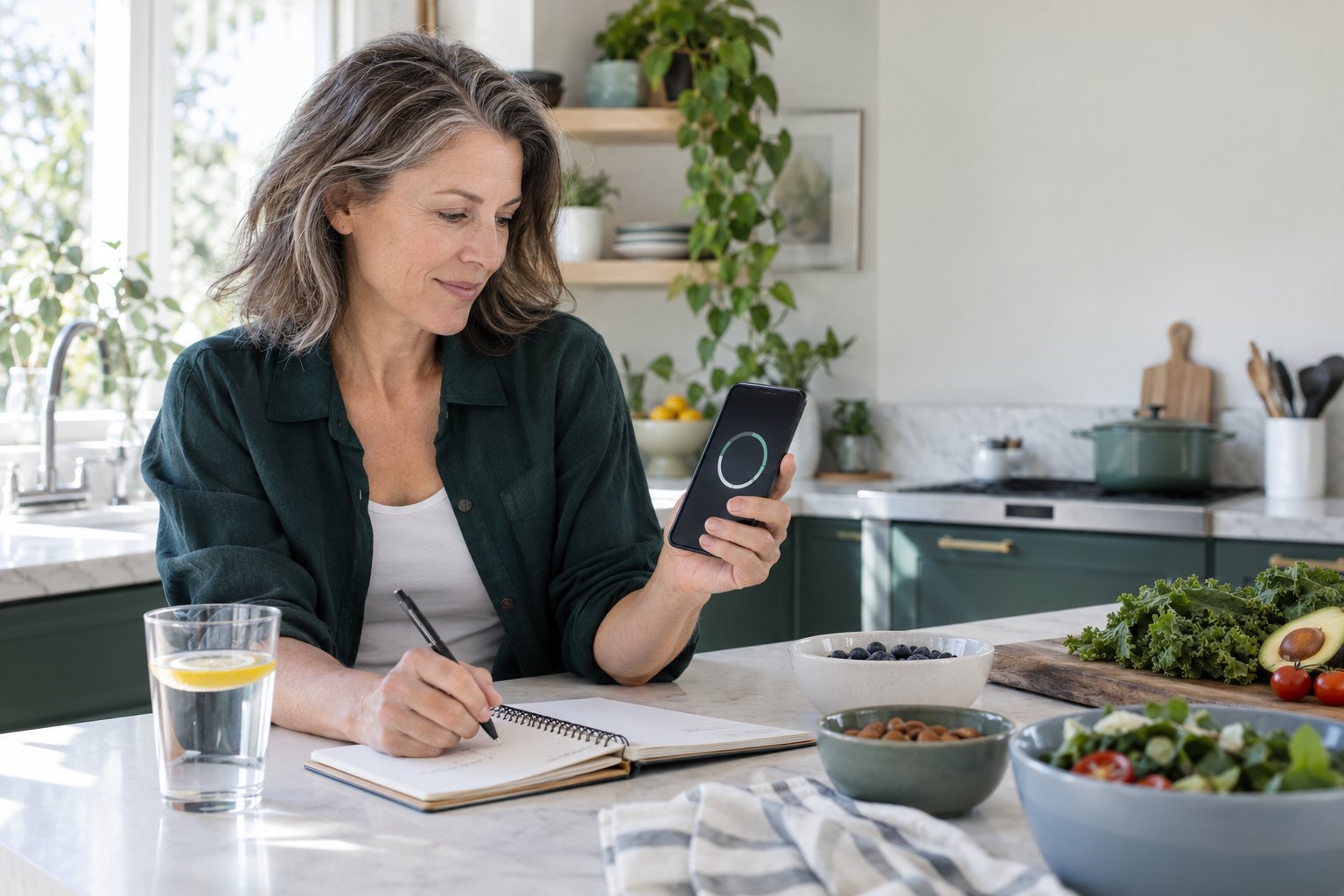
What a fasting app can realistically do
- Run a fasting timer and preserve a history of start and stop times.
- Make patterns visible, such as whether late meals repeatedly shorten an intended overnight fast.
- Provide reminders or prompts that reduce the need to watch the clock.
- Record related behaviors such as meals, water, activity, sleep, or weight when those features are useful.
- Support self-monitoring, which can help some people observe their own behavior more consistently.
Research on digital self-monitoring generally finds an association between greater adherence to tracking and better weight-management outcomes, but this does not prove that a particular app causes weight loss. Engagement also commonly declines over time. A tracker is most valuable when it remains simple enough to use and supports an appropriate plan.
What an app cannot establish
A timer knows elapsed time, not your physiology. Glycogen use, fat oxidation, ketone production, blood glucose, hydration, symptoms, and medication effects vary among individuals. App labels such as “fat burning” or fasting zones should be understood as educational estimates, not measurements or medical findings.
An app also cannot determine whether fasting is safe for you. People who use glucose-lowering or blood-pressure medicines, are pregnant or nursing, are younger than 18, are frail or underweight, have an eating-disorder history, or have relevant kidney, liver, pancreatic, cardiovascular, or other medical conditions should obtain individualized guidance before changing meal timing.
Fasting app features worth evaluating
| Feature | Why it matters | Question to ask |
|---|---|---|
| Timer and editing | A missed tap should not ruin the record. | Can start and stop times be corrected? |
| History and calendar | Patterns matter more than one perfect day. | Can I review weeks without exporting data? |
| Reminders | Useful prompts should not encourage escalation. | Can reminders be limited or disabled? |
| Data collection | More fields can mean more privacy exposure. | What is collected, shared, or sold? |
| Integrations | Syncing may reduce duplicate entry. | Which permissions and devices are required? |
| Accessibility | The app must remain readable and usable. | Are type, contrast, and controls comfortable? |
| Subscription | Premium features may not be necessary. | Does the free version solve my main problem? |
If your main need is food logging or deciding what to cook rather than timing a fast, use our nutrition-app comparison. It links to separate guides for MacroFactor food tracking and Eat This Much meal planning; those product links are non-affiliate.
Using Zero as an optional fasting tracker
Zero currently promotes a one-tap fasting timer, real-time progress, fasting history, and tracking across selected health pillars. Its 2026 product updates describe calendar access on Android, expanded Fasting Zones, meal logging, water and protein tracking, activity and sleep logging, and a rebuilt Apple Watch app. Features, platform availability, and paid access can change, so confirm the current listing before subscribing.
For a beginner, the core value is simpler: start the timer after the final calorie-containing food or drink, stop it when the next eating period begins, and review whether the chosen window works. Meal analysis, estimated zones, streaks, or other features are optional. They should not overrule hunger, dizziness, medication instructions, recovery needs, or medical advice.
If you want a dedicated timer and history, compare the free features with any paid plan inside the current app listing. Use an app as a neutral tracking tool; do not extend a fast merely to complete an app goal.
Before subscribing to any fasting app, confirm its current price, renewal terms and cancellation process. Paying for a timer is optional; choose a tool only when its features solve a practical problem for you.
A practical seven day app trial
| Day | Task | What to evaluate |
|---|---|---|
| 1 | Choose a modest overnight window. | Is setup clear and pressure-free? |
| 2 | Correct a start or stop time. | Can the record be edited easily? |
| 3 | Use only one helpful reminder. | Does it reduce mental effort? |
| 4 | Review requested permissions. | Are the data requests proportionate? |
| 5 | Check the weekly history. | Does it reveal a useful pattern? |
| 6 | Ignore features you do not need. | Does the app remain simple? |
| 7 | Decide whether to keep it. | Did it improve consistency without anxiety? |
Privacy and subscription checks
Before connecting wearables or entering health-related information, read the current privacy policy and permission screens. Consider whether the benefit of syncing sleep, activity, weight, or glucose information outweighs the additional data sharing. Use the fewest permissions needed for the feature you actually want.
If a free timer meets your needs, a subscription may add little value. If paid features genuinely reduce effort or help you review patterns, check the renewal period, trial terms, cancellation method, and current price inside the relevant app store. Prices and feature bundles change, so an editorial article should not hard-code a price unless it will be maintained.
When tracking becomes counterproductive
Stop or simplify tracking if it encourages longer fasting despite symptoms, creates guilt about ending a fast, increases preoccupation with food or weight, or interferes with medication, nutrition, sleep, training, or social functioning. People with current or previous eating-disorder symptoms should discuss restrictive tracking with a qualified clinician.
Frequently asked questions
Do I need an app to practice intermittent fasting?
No. A clock, calendar, or paper tracker can record an eating window. An app is worthwhile only if it makes the process easier.
Can a fasting app tell when I enter ketosis?
Not from elapsed time alone. Ketone production varies, and a timer does not measure blood or breath ketones.
Is the longest fasting streak the best result?
No. Longer is not automatically safer or more effective. Sustainability, nutrition, symptoms, medications, and personal circumstances matter.
Is Zero a medical app?
Zero can help track fasting and related habits, but it should not be treated as medical diagnosis, monitoring, or individualized treatment.
Should I pay for premium features?
Try the basic functions first. Pay only if a specific feature solves a recurring problem and the renewal terms are acceptable.
Want a simple way to track your fasting window?
Zero can provide a dedicated timer and history without replacing medical guidance or requiring a more aggressive schedule.
For a closer look at one option, read our Zero fasting app review, including its trial, privacy considerations and limitations.
Bottom line
When deciding how to choose a fasting app, choose the least complicated tool that supports an appropriate schedule. A fasting app can record time and reveal behavior patterns; it cannot verify metabolic claims, assess symptoms, or decide whether fasting is safe. If you are comparing fasting windows, our guide to common fasting schedules explains how 12:12, 14:10, 16:8, 5:2 and alternate-day fasting differ. Zero is a reasonable option to evaluate when you want a dedicated timer and history, provided its estimates and goals remain subordinate to your health needs and professional guidance.
Medical disclaimer
This material is for general educational purposes only. It is not medical advice, diagnosis, treatment, or a substitute for individualized care. Do not start fasting or change food, fluid, supplement, or medication timing based only on this article. Consult a qualified health professional, especially if you are pregnant or breastfeeding, have diabetes, take medication, have an eating-disorder history, are under 18, are frail or underweight, or have a medical condition affected by nutrition or hydration.
Sources
Zero Longevity. What’s New in Zero: Accurate Calorie Counts, Updated Apple Watch App, and Three Free Meals. August 10, 2026.
Zero Longevity. Quick Update: What’s New in Zero? May 6, 2026.
Zero Longevity. Team Android, This One’s for You. February 5, 2026.
Butryn ML et al. Digital self-monitoring: Does adherence or association with intervention outcomes differ by self-monitoring target? Obesity Science and Practice. 2019;5(2):126-133. PMCID: PMC6467973.
Federal Trade Commission. FTC’s Endorsement Guides: What People Are Asking. Updated June 2023. https://www.ftc.gov/business-guidance/resources/ftcs-endorsement-guides-what-people-are-asking
National Institute on Aging. Calorie Restriction and Fasting Diets: What Do We Know? https://www.nia.nih.gov/health/calorie-restriction-and-fasting-diets-what-do-we-know